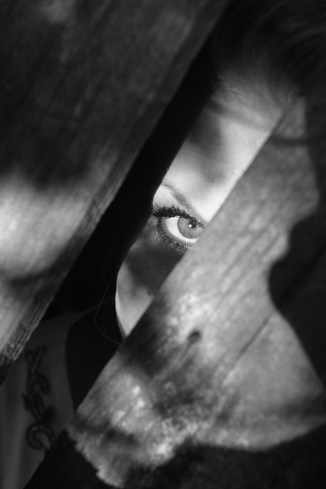
The view from behind the chair

pexels-photo (1)Children hide behind chairs for all sorts of reasons. Some fun, some not fun at all. When I was setting up my website a couple of months ago, I needed a title for it. Like my Sara Gethin pen name which had been sitting at the back of my mind for years, I had a name in reserve for the blog. It was a name that connected to the five-year-old child in my novel, ‘Not Thomas’, and his habit of hiding behind a big black chair whenever things at home got scary, or when someone unexpectedly knocked on the door. It was ‘The View from behind the Chair’.

I can relate to Tomos’s habit of curling up small behind the big chair. Don’t get me wrong, my childhood was happy and nothing at all like Tomos’s, but at around his age I did spend quite a lot of time behind a chair. I was hiding too – hiding from people who made fun of me.

Well, they didn’t make fun of me  exactly, just the fact that I was still attached to my old bottle at four years old. A baby’s bottle that was never filled. I loved it, that empty plastic bottle. We were inseparable. It was like the dummy I’d never had.

There was once a photo of me with it in my mouth, taken by accident. I was standing at the back of a large family group, peeping through the adults’ legs. And there it was – Bottle – hanging like an oversized cigarette from the corner of my lip. No one realised I had popped it in my mouth.

But when the photos eventually came back from the chemist (it was that long ago) oh, the shame! I still remember it. Here was hard evidence of my odd habit. It was burned in the fireplace – the photo that is, not the bottle (Bottle survived to suffer a different fate at a later date) and he and I ran off once more to our hiding place behind the big chair.

Despite the problems he caused me, Bottle also made me think on my feet. One day, a neighbour came to our open back door while I was playing in the kitchen with my older brother and sister. My bottle, as usual, was firmly clamped between my teeth. As I looked in horror at our ‘Aunty’ Lois standing on the doorstep, I silently and with an ashen-faced whipped the bottle from my mouth and dropped it behind my back into the laundry basket my mother was carrying on her way to our top-loader washing machine.

My family thought it was hilarious, especially as I’d stood there staring at the woman for a good five seconds with the bottle still in my mouth before I’d surreptitiously (or so I’d thought) disposed of it. They were still recounting the story years later. It caused me quite a lot of confusion as a child. I was so proud that I’d done something my family thought very, very funny, but I was also ashamed because Bottle was a part of the story. And I was ashamed of Bottle.

pexels-photo-262103

Of course, I would never have felt Bottle was shameful if other people hadn’t made me feel that way. While my immediate family mostly ignored my habit, I was teased mercilessly by my many uncles whenever they visited, which was often. I spent hours behind that chair in our lounge, waiting for them to go home so Bottle and I could come out.

I can vividly recall the texture of the fabric on the chair’s back, the raised pattern beneath my fingers, the smell of the cloth, and yes, the view, half obscured by the arm of the chair. A section of the TV screen, a glimpse of a programme I’d been looking forward to seeing. And all the time listening for my name to be mentioned, along with a teasing – ‘What have you got behind there? Come out and show us’.

That’s absolutely nowhere near as bad as the problems some people endured in childhood, I know. And it’s nothing like what poor Tomos has to put up with in my novel. But remembering how I felt as a young child back then certainly helped me put myself in Tomos’s place – small and uncomfortable.

My ‘problem’ was easily resolved in the end. Bottle broke. I’d tried to take good care of him, but he was four years old. That’s ancient for a bottle. So he ended up in the dustbin and I cried and cried. But eventually I got over him. Life without him was easier. And there was no reason to hide behind the chair anymore.

Sadly, that’s Tomos’s place now.

And the blog ended up being called ‘Not Me’, like ‘Not Thomas’, because I’m not Sara, I’m Wendy really. What do you reckon, should I have gone for ‘The View from behind the Chair’ instead?

All other views considered.
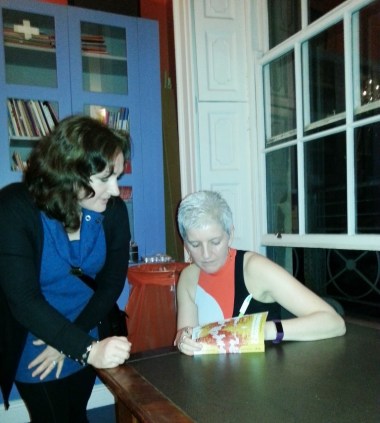
To launch or not to launch, and what makes a good book launch anyway?

20170315_193927
Well, what does make a good book launch? It’s a question I’ve thought about a lot lately. Some would say the answer is complimentary wine – they’re the people who see the word ‘refreshments’ on the invite and hope it’s not referring to a nice cup of tea. Others would say cake. I most definitely fall into the cake camp. There is no event, bookish or otherwise, that I believe can’t be improved by a hefty slice of Victoria sponge. But I had to admit my theory could be wrong when I attended an amazing book launch the other evening – where there was not a cake crumb in sight.

It was a launch by award-winning Irish writer, Jane Mitchell, hosted at the Irish Writers’ Centre, an atmospheric and historic town house in the heart of Dublin. I was excited to find details of the event on-line, and delighted that it was open to all. I’d been disappointed that I was missing the book launch of Jan Newton for her novel, ‘Remember No More’, while I was away in Ireland. But if I couldn’t support a fellow Honno author on her launch night, then I could support an Irish writer. I saw from Facebook that Jan’s night had gone well and, as it turned out, there were plenty of people supporting Jane’s book too.

My thoughts have been turning (and returning) to launches recently as I’m planning to hold my own for ‘Not Thomas’ in a couple of months. And while I’ve been planning the event, I’ve occasionally had the scandalous thought that maybe I don’t need a launch at all. Perhaps I can smuggle my new book out into the world without having to stand up and talk in front of people? Cowardly, I know, and pointless too. Surely the whole aim is to get as many readers as possible to notice a new offering. So I give myself a shake and remind myself that the answer to the question ‘to launch or not to launch?’ is a resounding ‘to launch’.

And I have launched books before. This, however, will be my first for a novel intended for adults. In the past, when my children’s books have been published, I’ve gone along to the lovely primary school in Kidwelly, the one where I taught and where my children were pupils, and I’ve celebrated the day with them. The local paper usually covers the event and the children always provide plenty of enthusiasm. And the best thing, of course, is that I never need worry no one will turn up. There’s a captive audience – guaranteed. My next book launch will be different, though. I won’t be skipping around in a comedy hat (thank goodness I’m spared that in front of other adults!). But I won’t have a captive audience either. It’s the kind of thought that keeps me awake at night.

So it was refreshing to hear Jane Mitchell, when she took to the podium at her packed Dublin launch, admit she’d been worried that no one would turn up. Even very experienced authors like her have their doubts and I, for one, appreciated her honesty.

20170315_202319But there was never any real doubt her launch would be well supported. She has written a breath-taking book and it’s already had wonderful reviews. ‘A Dangerous Crossing’ is the story of a thirteen-year-old boy fleeing from the war in Syria. It’s extremely well researched fiction that paints a true picture of the dangers child refugees face. And it is beautifully written. The subject and style make it very difficult to put down, and while it’s described as a children’s novel, it’s a wonderful read for adults too. I’ve almost reached the end of my signed copy and I can’t recommend it highly enough.

I love hearing publishers talk about why they publish the books they do and it was interesting to hear Jane’s publisher explain how ‘A Dangerous Crossing’ came about. Little Island is a small, Irish-based press that’s interested in publishing books that give children a world view. They felt there was a need for a book for children about child refugees, so they approached Jane, who they knew from her award-winning fiction for older children and young adults. She was instantly drawn to the idea of writing a story of a child refugee and didn’t hesitate in accepting the commission.

Interesting, too, was the way editor, Siobhan Parkinson, described working with the author. Jane, she said, was professional, dependable, always met deadlines and took on board constructive criticism with good grace. I was busy making mental notes. It’s pretty obvious, I know, but sometimes it’s easy to forget the basics, and here was an experienced editor reminding everyone of good practice.

While the author and editor were both very engaging speakers, the highlight of the evening was definitely their guest speaker. As ‘A Dangerous Crossing’ was going to press, Little Island approached Amnesty International to ask if they might be interested in reading the novel. They were. Not only did they read it but they were more than happy to endorse it too. They also gave the publisher permission to use Amnesty’s logo on the book’s cover. And at the launch, the Executive Director of the Irish branch of Amnesty, Colm O’Gorman, gave a heartfelt speech. His description of the refugee camps he’s visited and the terrifying journeys Syrians – often lone children – are forced to make to find safety was heart-breaking. And so was his view of how little we in more privileged countries are doing to help.

All in all, it was a remarkable book launch for a remarkable book. And yes, as well as the amazing speakers, the fantastic venue and a supportive crowd, there was also complimentary wine – quite a lot of it too (well, it was Dublin during St Patrick’s week). And perhaps that’s everything you need for a great book launch. Perhaps that’s enough. Maybe… whisper it… just maybe you don’t need cake after all.

Here’s where you can find Jane’s new novel:

http://www.amazon.co.uk/Dangerous-Crossing-TBC-Jane-Mitchell/dp/1910411582

The child at the window – images, ideas and imagination

pexels-photoThere are some images that stay with us. Those that are dark and frightening may haunt us for a lifetime; others sit quietly in our subconscious and float to the surface now and then. One image I’ve carried with me for years is that of a child at a window, and it became a recurring theme in my writing.

People often ask where ideas for stories come from, and it’s something that puzzled me too, until I actually set aside time to write. I was forever thinking up ideas for what might be an interesting basis for a story while I was chopping vegetables or driving around. I’d have a vision of what a story could look like and then, by the time I’d finished preparing dinner or parked the car, I’d promptly forget the whole thing.

Eventually, after starting a writing course, I began to keep a notebook for these germs of creativity. It was the first piece of advice my writing tutor offered. And I slowly trained myself to retain the ideas until I could write them down. At last I managed to corral my sparks of inspiration into a form I could use. Then I found there was inspiration everywhere – on television and in newspapers, in conversations overheard in cafes or on the train. And, of course, in real day-to-day life.

I used to work as a primary school teacher and people sometimes ask if the central character in ‘Not Thomas’ is based on a child I taught. In fact, he’s not based on any one child – he’s a mixture of many disadvantaged children I’ve known from the schools I taught at. Some of these children were already being monitored by social services, while others were on the verge of being referred.

‘At risk’ children tend to stick in your mind. There was the girl left alone every evening while her mother went out with a new boyfriend; the many children who came to school hungry, having not eaten a proper meal since their last school dinner. And the young boy that kept watch from the window to see when other children were setting out for school. His mother never got up early enough to see him off and he couldn’t tell the time, so that was the only way he had of knowing when to leave. He spent a long time looking out of that window.

There can’t be many teachers who haven’t known at least one child like these. Most schools have quite a few. Sometimes they’re the ones that slip through the net, the ones whose lives are difficult but who somehow struggle on. Often the best a teacher can do is make sure social services know about their concerns, and then keep a careful eye on the child.

Tomos, the boy in my novel, spends hours at the window. He’s watching for his neighbour to stop at the gate and walk him to school. And he waits at the window for his mother to come home too. Even though he has visits from a social worker, he’s still suffering from neglect. His supply teacher – he calls her simply ‘Miss’ – knows he’s not being properly looked after and she’s raised her concerns with the school’s head. She’s done what teachers everywhere do, and she’s keeping a close eye on him. She’s not based on any particular teacher I taught with, although there were plenty like her – genuinely concerned people who were always striving to do their best.

But there’s more than concern driving Miss’s actions. She has a shared history with Tomos, and her own reasons for bringing sandwiches and clean clothes to school for him. And it means she’s prepared to do much more than any right-minded teacher would.

She, of course, is a fictional teacher, caring for a fictional child. Over the years I spent writing about them, Tomos and Miss became very real to me. Even so, they’re still simply the products of my imagination. But that image – the one of the child looking out of the window – that’s reality. It’s an image recreated over and over by the many, many children waiting patiently to go to school, or watching all alone for someone to come home.

Those children are completely real.

not-thomas-header